A bathroom needs useful light at the mirror and enough general light to use the room, but product suitability for moisture and the installation position comes first. Decorative appearance or a sensor feature does not approve a fitting for a wet area.
Plan the mirror from the user’s position
Test how light reaches the face rather than judging the brightness of the fitting alone. A source directly above the head can create different shadows from light arriving from the sides. Check the seated or standing heights that matter, mirror reflections and the view from the doorway. Use a layout that avoids an exposed bright source in the normal line of sight.
Keep the room light separate from the mirror task
Mirror lighting may not adequately illuminate the shower entrance, cupboards or route to the door. Plan those areas explicitly instead of increasing the mirror light until everything is bright. White appearance and colour rendering are separate properties; assess them on the real surfaces and avoid mixing visibly different white tones unintentionally.
Have wet-area suitability verified
- Ask a qualified installer to assess the exact location, local requirements, fitting rating, power equipment and installation method.
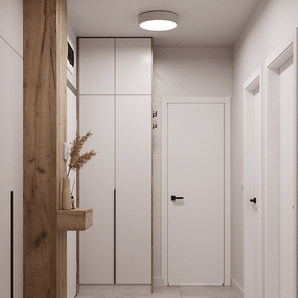
- Do not infer water protection from “LED”, a ceiling-light shape, a magnetic mount or motion sensing.
- Keep portable dry-indoor lights and their charging equipment out of unapproved wet locations.
- Use the product’s actual documentation; a general collection or compatibility matrix is not approval for a bathroom zone.
Frequently Asked Questions
Does an IP label alone settle the complete installation?
No. The exact location, equipment and installation method still need to meet the applicable requirements.
Does automatic sensing make a lamp suitable for a shower area?
No. Sensing and protection against water are independent requirements.