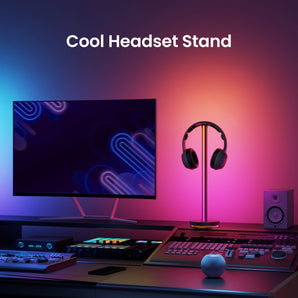
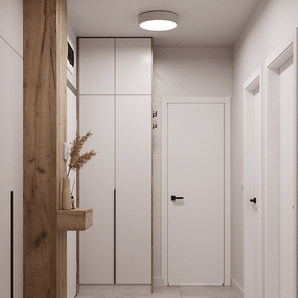
A useful home-office lighting plan separates general room light from the light needed on paper, the keyboard and other work. Start from your seated view and actual tasks, then choose fittings that solve the gaps without adding reflections.
Keep room and task lighting distinct
A bright screen in an otherwise dark room creates a different scene from a desk with balanced surrounding light. General lighting helps you move and see the room; a task source directs light where detail is needed. Do not assume that decorative colour lighting or a brighter monitor can replace a source for reading printed material.
Choose a mount around the work
A compatible monitor bar can leave the desk clear, while an independently positioned lamp can reach work beside the display. Check monitor shape, webcam clearance, base space and cable routes. Compare the real adjustment range and task coverage; product format alone does not establish enough light for a large drawing area or shared table.
Test reflections and ordinary routines
Sit where you normally work, turn on the display and inspect reflections from lamps and windows. Reposition sources and use window controls before increasing brightness. Choose a white appearance you find suitable alongside the other lighting. If adding schedules, check the model’s control requirements and leave an understandable way for others to operate the room.
Related choices and guides
Frequently asked questions
Do I need a fixed colour temperature for every home office?
No single setting suits every task and room. Evaluate the actual light, materials and nearby daylight.
Should the task light point at the screen?
Its purpose is usually the work surface. Test the angle to avoid unwanted screen reflections.