LED technology can offer efficient light production, compact source designs and useful control options. Those advantages still depend on the complete product and its use. Compare documented output, power, installation and controls instead of treating “LED” as a promise of every benefit.
Efficiency: compare the same lighting job
DOE describes LED lighting as an efficient technology, but a useful comparison needs the required light output and actual electrical input. A brighter or larger installation may consume more even if its sources are efficient. The LED name alone cannot establish a household saving or a payback period.
Form: a small source allows different products
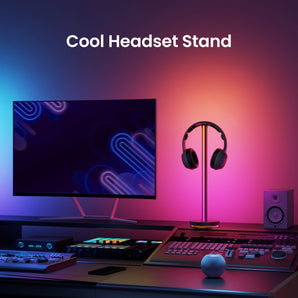
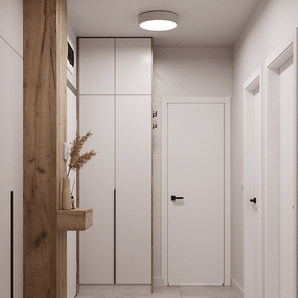
The compact LED source supports designs beyond a conventional bulb. The current catalog includes monitor bars, ceiling fittings, table lights and decorative modules. Choose the form that serves the task; a coloured panel and a ceiling fitting are not interchangeable just because both use LEDs.
Life: use the right meaning of the rating
LED useful-life information can describe retained light output rather than one universal day of failure. Drivers and other components matter too. Read the chosen product’s rating and operating conditions separately from its warranty. Do not assume that every lamp lasts the same number of years or tolerates extreme environments.
Control: select features, not a label
D2 documents adjustable white and colour functions, while the plug-in night light uses a light sensor. Neither proves that all LEDs include Wi-Fi, voice control, music effects or identical dimming compatibility. List the function you need and verify it for the actual model.