
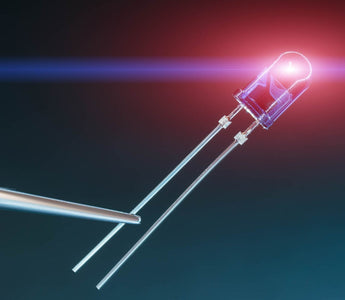
An LED is a semiconductor light source. A complete LED lamp adds power electronics, thermal management, optics and a housing around that source. Understanding these layers explains why an LED chip specification is not the performance specification of an entire light.
From electricity to visible light
LEDs emit light through electroluminescence rather than a heated filament. Their semiconductor design determines the emitted light. White-light systems can use phosphor conversion, a mixture of coloured light sources, or a combination of approaches. A white lamp therefore does not have to contain the same channel arrangement as a decorative RGB product.
Manufacture involves several stages
The DOE manufacturing overview describes producing an LED wafer, processing it and separating it into individual chips. Chips can then be packaged, with phosphor added where the design uses it, before integration into a lamp or luminaire. Other assembly approaches exist. This is a general manufacturing sequence, not a description of a particular Yeelight factory.
The driver, optics and heat path matter
A driver supplies the electrical conditions the LEDs need. Optics and diffusers distribute the light, while the thermal design carries heat away. Those parts affect the installed result alongside the emitters. Quoting a component’s output or expected life cannot establish the complete product’s light distribution, service life or behaviour in an enclosed fitting.
What this means when comparing products
Compare the finished model and its intended installation, not merely the number of LEDs. Use its actual output, white-light information, controls and mounting requirements. Smart-home connectivity is an additional control layer; it does not identify the manufacturing process or make two different lighting formats equivalent.







