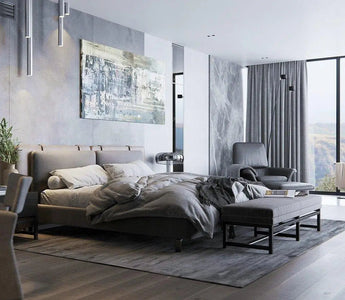
Accent lighting draws attention to an object, texture or architectural feature. It adds a highlight to a lighting plan rather than replacing the general light needed to move around or the task light needed to read, cook or work.
Choose the feature before the fixture
Start with one useful focal point: a shelf, a textured wall, an artwork or the edge of furniture. Decide where people will view it from, then test the light so the fixture does not shine into their eyes or reflect harshly from glass. A spotlight, strip and table lamp create different effects; the right type depends on the object and installation.
Shelves, cabinets and toe kicks
A hidden strip under a shelf can light the surface below, while an edge-mounted strip can outline furniture. Toe-kick lighting adds a low accent near the floor, but it should not be the only light for a busy route. Check cable access, heat and moisture exposure. Indoor decorative strips should not be assumed suitable for a patio or splash-prone location.
Avoid visible dots and incompatible extensions
Look at the result on the actual surface: LED spacing, viewing angle and the distance to the surface can change the appearance. Adding an extension does not change the LED spacing of the original strip. Use a compatible standard kit and extension from the same family; do not buy an extension expecting it to be a complete light.
Keep the other light layers
Retain general room lighting and a separate light for tasks. Start the accent at a modest brightness and adjust it alongside those layers. For a coloured shelf accent, compare the current strip options; for automatic cupboard light, compare the motion-sensor closet light. A sensor light and a continuous decorative accent are different use cases.
Related choices and guides
Frequently asked questions
Is accent lighting the main room light?
No. Its purpose is to highlight a feature. General and task lighting still need their own planning.
Does adding an extension remove visible LED dots?
No. An extension adds compatible length; it does not change the original LED spacing or automatically create a continuous-looking line.
Can an indoor accent strip be used outdoors?
Only if the exact product, power equipment and installation are approved for that environment. Do not infer outdoor protection from a decorative photograph.