Ambient lighting is the general light that makes the room usable as a whole. It may come from ceiling lights, reflected light and other suitably distributed sources. Indirect light is one way to create it, not the definition of every ambient-lighting installation.
Separate purpose from direction
Ambient describes the role of the light. Direct and indirect describe how light reaches a surface. A ceiling fixture can contribute general light directly, while a light bounced from a wall or ceiling can provide an indirect layer. A table lamp may serve a task in one position and contribute to general light in another.
Plan with the furniture in place
Look at the route between the door and seating, the corners and any work area. Avoid making one corner very bright while leaving the rest difficult to use. Test the room at the intended evening setting and leave accessible controls. Add a reading light where needed rather than increasing every light just to illuminate one book.
Compare colour appearance, colour rendering and brightness
Kelvin describes the appearance of white light, not its brightness. Colour rendering describes how objects appear under a source and is different from colour temperature. Lumens describe output; the actual distribution depends on the fixture and room. A CRI value is not a percentage of daylight and does not guarantee identical colour appearance in every situation.
Use decorative light as a separate layer
A strip around furniture or a coloured table lamp can complement the room, but it is not automatically enough for general illumination. Compare ceiling-light sizes and installation needs separately from strips and table lamps. Skylight P21 needs its compatible gateway for app control; other ceiling-light models can have different control arrangements. Choose controls that suit how the room is used.
Fixture forms that contribute to ambient light
Many fixture shapes can add to a room’s general light. What matters is their distribution and position, not the shape alone:
- Ceiling panels and skylights: wide, even ceiling light; compare sizes and installation needs, for example the Skylight range.
- Chandeliers and pendants: check exposed lamps and whether light reaches the surrounding space.
- Recessed fittings: plan spacing and access before relying on them.
- Track and wall fittings: check where heads point and whether the source is visible from seats.
- Floor and table lamps: useful as a supporting layer; they rarely light a whole room alone.
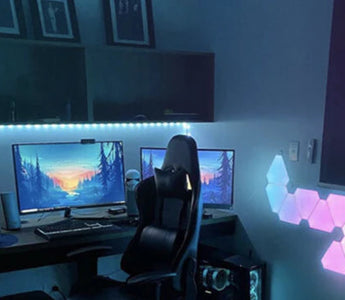
- Strips: an indirect glow around furniture or a TV; a decorative layer rather than the main light.
Related choices and guides
Frequently asked questions
Must ambient lighting be indirect?
No. Ambient is a lighting role. Direct and indirect sources can both contribute to the general light layer.
Does a higher Kelvin number mean more light?
No. Kelvin describes white-light appearance. Check output, distribution and the installed result separately.
Can RGB decorative light replace every other light?
Not automatically. Keep enough general light for the room and use task lighting for activities that need it.