
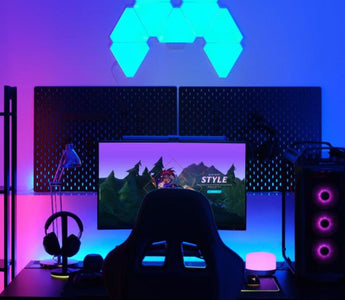
RGB lighting mixes red, green and blue light to produce different colours. The name describes a colour system, not a complete set of smart features. App control, segmented effects and screen synchronisation are separate product capabilities.
Colour mixing is not paint mixing
Adding different amounts of the three light channels changes the combined light. A setting labelled white in an RGB system does not by itself establish the colour quality of a dedicated white-light channel. Choose reading or work lighting using the product’s white-light information as well as the decorative colour options.
RGB and RGBIC are not interchangeable labels
RGBIC products can offer separately controlled sections, but the actual zones and effects depend on the specific controller and strip. Do not assume every RGB strip shows several independently chosen colours at once. Length, extension rules, power and available software effects must be checked for the exact family.
Choose effects by their actual input
Music response uses an audio-related input; game integration works with supported software. Screen synchronisation requires a system that explicitly uses the displayed image. A colour-changing lamp placed beside a TV gains none of these capabilities from placement alone. Start with the effect you need and confirm the required components before planning the layout.
Related choices and guides
Frequently asked questions
Does RGB mean Wi-Fi or Matter?
No. Colour channels do not specify the connection technology or compatible ecosystem.
Is music sync the same as matching TV picture colours?
No. Sound response and picture-based synchronisation use different inputs and must be checked separately.







