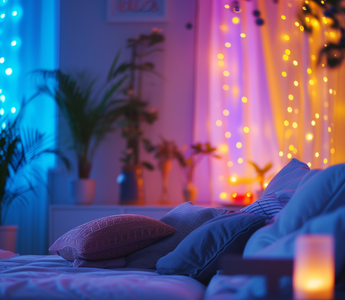
Try these as placement and control experiments using complete products in their permitted locations. “DIY” here means planning the arrangement—not modifying mains wiring, inventing strip connections or treating every LED as outdoor-rated.
Ten ideas to test one at a time
- Reading corner: test a table light on the actual page and check the view from the neighbouring seat.
- Storage shelf: measure a Closet Light position with the door fully open and charging access retained.
- Desk background: try one steady wall area before outlining the whole desk.
- Console feature: place a complete Cube+Base arrangement where it does not obstruct equipment access.
- White-light comparison: inspect the same familiar objects under the chosen model’s supported settings.
- Display object: use D2’s documented colour controls to try a single decorative colour instead of adding several devices.
- Bedside control: check that the normal light can be operated from the bed without a stretched cable.
- Shared-room reset: establish one steady arrangement another person can restore easily.
- Night route: choose an actual motion-sensor or light-sensor product according to the required behaviour.
- Portable work corner: check the exact folding-lamp colour variant and permitted use before planning a temporary reading position.
Choose the complete product for the experiment
The Closet Light has separate 20 cm and 40 cm variants. Cube extensions need a base-equipped system. The folding table lamp has separate colour variants; the red variant was out of stock at this review. Do not turn a planning idea into an assumption that every size, pack or colour is available.
Keep the trial reversible
Check the proposed view and daily controls before final manufacturer-permitted mounting. Respect product location and power instructions, and keep movement clear of cables. Stop if the project needs an unverified cut, electrical alteration or unsupported mounting method; choose a different permitted arrangement instead.