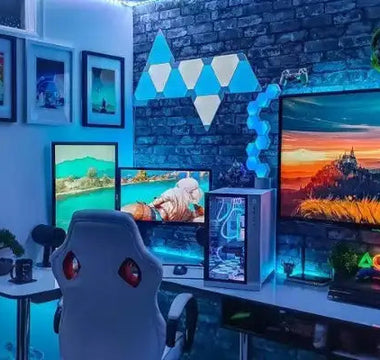
Task lighting serves a particular activity: reading a page, preparing food, examining a sample or working at a desk. Its purpose is to make the relevant surface usable, not to make every part of the room equally bright.
Start with the task, not the lamp shape
Identify the area that needs detail and the positions from which it is used. A reading chair, a sewing table and a kitchen counter need different aiming and mounting. Keep the source from shining directly into the user’s normal view. General room light still matters; a task light is a layer, not a reason to leave the rest of the space unusable.
Three placement checks
- For paper or craft work, test whether the hands or tools cast a shadow across the detail. Move the source before simply raising its brightness.
- For screen work, light the desk without creating a visible reflection in the display. Check from the seated position.
- For a long work surface, inspect the whole usable area. One bright spot does not show that the far end is adequately lit.
Choose adjustment you can actually use
A monitor-mounted light can save desk space if the screen and mount are compatible. A separately positioned desk lamp can reach a different part of the table. Compare the beam, mount, adjustment and power route of the actual model. Wireless control does not mean the light itself needs no power cable.
Check the room after the task changes
A dining table used for homework may need a different setting from a meal. A movable task source or supported dimming can help, but the fitting and controls must be compatible. For colour-critical work, check colour-rendering information separately from brightness and white appearance.